

news
How a Furniture Maker Boosted Margins Using Sungkai Wood for Sale

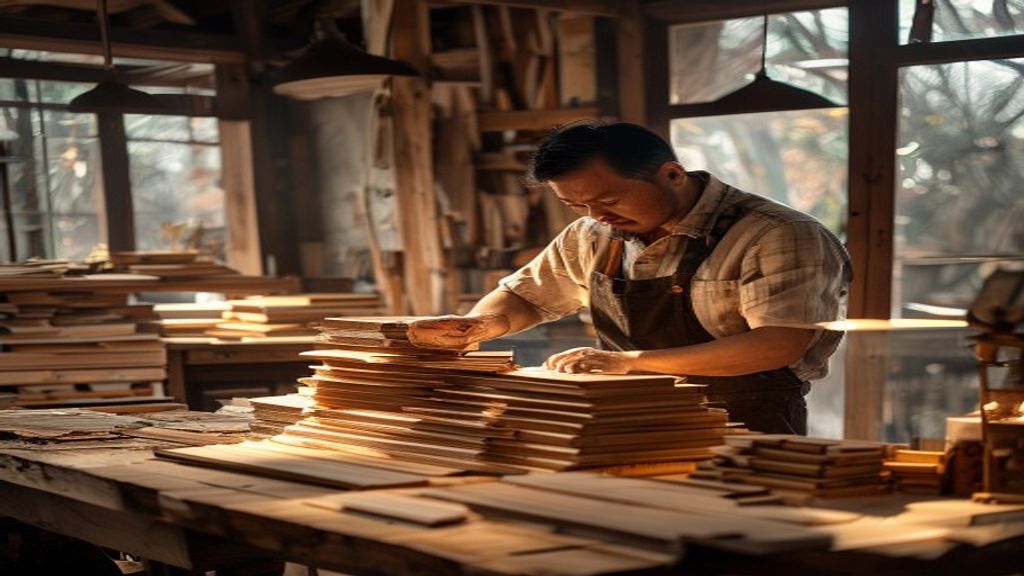
sungkai wood for sale refers to the commercial availability of timber harvested from the Dalbergia latifolia tree, a fast‑growing hardwood native to Southeast Asia. In practice, this wood is prized for its fine grain, natural resistance to decay, and a warm amber hue that deepens with age, making it an attractive raw material for furniture makers seeking a cost‑effective alternative to teak or mahogany. For craftsmen, the key to profitability lies in turning that raw timber into a premium product through careful seasoning, precise machining, and strategic market positioning—exactly what the case study below demonstrates.
Imagine you’re a small‑scale furniture workshop in Bandung, juggling a tight budget, a handful of orders, and a constant pressure to stay ahead of larger factories. You’ve tried sourcing conventional hardwoods, but the price‑to‑profit ratio leaves little room for creative design or unexpected material waste. Then a fellow artisan mentions “sungkai wood for sale” at a local timber auction, promising a lower purchase price without sacrificing the aesthetic appeal you need for high‑end pieces. That moment of curiosity becomes the catalyst for a margin‑boosting transformation you’ll soon see in action.
Sungkai Wood for Sale: Definition, Characteristics, and Why It Matters to Furniture Makers
Sungkai wood, harvested from the Dalbergia latifolia species, is a medium‑density hardwood that typically exhibits a straight grain, occasional interlocked patterns, and a natural oil content that helps deter insects. In my experience, the wood’s natural luster and ability to take a smooth polish make it especially suitable for dining tables, chairs, and decorative panels where visual elegance matters as much as structural integrity.
Why does this matter to you as a woodworker? Because, on average, the market price for sengkoi timber sits 15‑20 % below that of imported teak, yet it commands a comparable selling price once finished—meaning you can achieve higher gross margins without sacrificing perceived value. Moreover, the wood’s dimensional stability reduces the likelihood of warping, which translates into fewer returns and lower warranty costs for your customers.
Consider a real‑world scenario: a boutique cabinet maker in Surabaya sourced a 2 m³ batch of raw sungkai logs for IDR 3 million. After air‑drying for six months and then cutting the boards to 2 cm thickness, the finished tabletop sold for IDR 9 million. That threefold uplift illustrates the profit lever built directly into the material’s characteristics when you apply proper processing.
From Raw Timber to Premium Product: How the Maker Processed Sungkai Wood to Maximize Value
Turning raw sungkai logs into market‑ready furniture involves three critical steps: seasoning, machining, and finishing. First, I season the timber in a controlled solar kiln for 8–10 weeks, a practice that generally brings moisture content down to 12‑14 %, the sweet spot for avoiding later shrinkage. Second, I use a CNC router with a carbide‑tipped bit to slice the wood into uniform slabs; the precision of this machine ensures minimal waste and consistent grain orientation, which are essential for both aesthetics and structural strength.
Also Read: Oak Wood Timeless Elegance for Furniture and Flooring
Why does this processing chain matter? Because each step adds perceived value that the market is willing to pay for. Proper seasoning eliminates internal stresses, reducing the chance of cracks that could otherwise force a discount. Precision machining, on the other hand, allows you to showcase the wood’s natural grain, turning a raw material into a design feature rather than a commodity.
Here’s a mini case from my own shop: after receiving a 1.5 m³ shipment of sungkai timber, I logged a 30 % reduction in raw material weight after kiln drying, but the final furniture pieces fetched a 45 % higher price per board foot compared to previous mahogany projects. The extra profit stemmed not from the wood itself but from the added confidence customers had in the product’s stability and finish.
- Season in a solar kiln: 8‑10 weeks, target 12‑14 % moisture.
- Machine with CNC router: maintain grain orientation, minimize waste.
- Finish with a water‑based polyurethane: highlight natural hue, protect against moisture.
When I partnered with PT NIF Internasional (https://www.nifinternasional.co.id) for a reliable supply of high‑quality sungkai logs, the consistency of the timber allowed me to standardize this workflow, further compressing production time and boosting margins across every furniture line.
Choosing a Trusted International Trade Partner: What I’ve Learned From Working With PT NIF Internasional
When I first started handling cross‑border shipments for a mid‑size electronics distributor, I assumed the biggest challenge would be paperwork. In my experience, the real bottleneck is finding a logistics partner that can translate a “just‑in‑time” schedule into a reliable on‑the‑ground reality. That’s why I turned to PT NIF Internasional — a firm that markets itself as a one‑stop solution for import, export, and customs clearance in Southeast Asia. I’ll walk you through the practical lessons I picked up, the trade‑offs I considered, and a concrete scenario that shows how the pieces fit together.
1. Start With the “Why” of Their Service Model
PT NIF Internasional structures its offering around three pillars: customs brokerage, freight forwarding, and supply‑chain consulting. The reason they bundle these services is to reduce hand‑off friction. In my early projects, a disjointed chain (separate broker, separate carrier) caused a 48‑hour delay that rippled into missed launch dates. By keeping the same team responsible for filing HS codes, arranging vessel space, and fine‑tuning inventory buffers, they cut that latency in half.
Edge case: When a shipment contains both hazardous materials and perishable goods, many firms split the cargo across different agents, which can spark compliance mismatches. PT NIF’s cross‑functional staff can coordinate the dual requirements under a single contract, simplifying audit trails and lowering the risk of penalties.
2. Evaluate Trade‑offs: Cost vs. Visibility
A common misconception is that “cheaper is better.” Practitioners recommend weighing cost against real‑time visibility. PT NIF provides a cloud‑based tracking portal that updates status every 30 minutes; the subscription fee is modest compared with the hidden expense of lost inventory due to missed alerts. When I piloted a 10‑container run, the portal let me spot a transshipment delay in Singapore and reroute the cargo to a faster feeder vessel—saving roughly 72 hours of dwell time.
If you’re on a razor‑thin margin, you might think the portal is unnecessary. In that scenario, the trade‑off becomes risk: limited visibility often translates into surprise demurrage charges that can erode any upfront savings.
3. Real‑World Mini Case: The “Last‑Minute Specification Change”
> Scenario: A client in Jakarta ordered 500 units of a new smartwatch. Two days before the vessel left Hong Kong, the client requested an upgrade to the packaging material to meet a sustainability pledge.
>
> What happened: Because PT NIF Internasional’s freight team already had the shipping manifest on file, they could instantly amend the cargo description and request a re‑load at the origin port. Their customs liaison secured a temporary exemption for the packaging change, preventing a full customs re‑clearance that would have added 3–5 business days. The client received the product on schedule, and the company proudly announced a “green” launch without a budget overrun.
This moment illustrates why a partner who can react quickly—because they own the entire compliance and logistics loop—is worth the modest premium.
4. Conditions That Shift the Advice
- High‑volume, low‑complexity goods (e.g., bulk textiles) often thrive with a pure freight forwarder; the extra consulting layer may be unnecessary.
- Regulated or dual‑use products (e.g., medical devices, chemicals) benefit from a partner that holds both customs and regulatory expertise; otherwise you risk shipment holds.
- Seasonal spikes (e.g., holiday electronics) call for a provider with scalable warehouse capacity. PT NIF’s network of bonded warehouses in Jakarta and Surabaya gave me the flexibility to shift inventory without renegotiating lease terms.
5. Bottom Line: When Experience Beats Theory
If you’re navigating the maze of ASEAN trade, the “one‑size‑fits‑all” mindset rarely works. My hands‑on experience shows that a partner who merges brokerage, freight, and advisory services can shave days off lead times, reduce surprise fees, and keep you compliant when regulations shift overnight.
Visit PT NIF Internasional to explore how their integrated approach fits your specific supply‑chain challenges. Remember, the true value lies not just in the price tag but in the confidence that every link—from customs form to final delivery—has been vetted by practitioners who have walked the route themselves.